
You posted the role. Applications flooded in. You have shortlisted fifteen candidates who all look genuinely solid on paper, relevant experience, good schools, articulate cover letters. You should feel relieved. Instead, you feel stuck.
After four hours of back-to-back interviews, you are more confused than when you started. Candidate A was confident and personable. Candidate B had slightly better technical answers but seemed less enthusiastic. Candidate C asked insightful questions but stumbled on a scenario you thought was straightforward. By the evening, you're replaying conversations in your head, second-guessing your own impressions, and wondering if you're overthinking or underthinking.
This is not a talent shortage problem. This is a signal clarity problem. And it is quietly sabotaging hiring decisions across thousands of growing companies.
The Paradox of Choice in Modern Recruitment
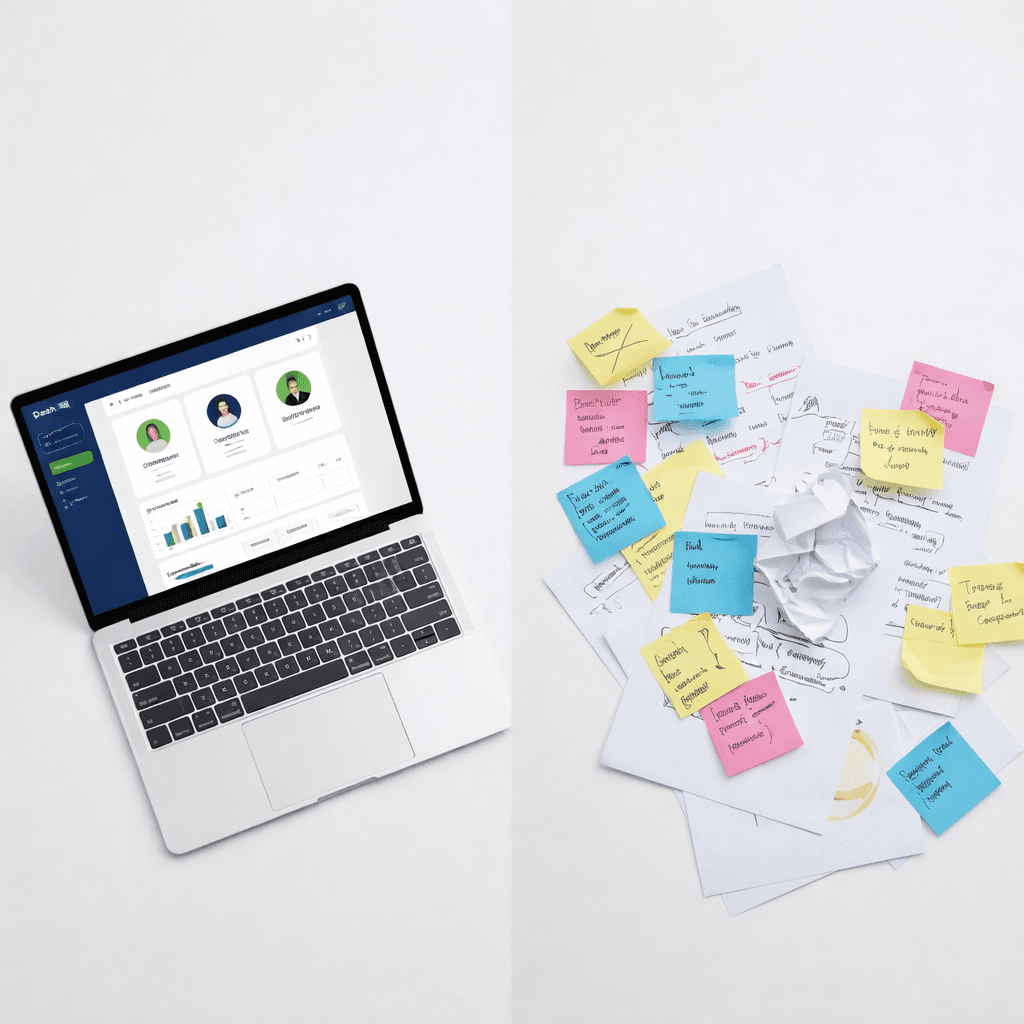
Here's what makes this phenomenon so insidious: the difficulty of hiring does not correlate with candidate quality. In fact, it often intensifies when you do have strong applicants.
The issue is structural. When you're hiring fast, whether you are a 20-person startup scaling to 50 or a recruitment agency placing candidates under tight deadlines, you are operating in a system designed for volume, not clarity. You are asked to make high-stakes decisions using tools built for a different era: unstructured interviews, subjective notes, gut instinct, and comparison fatigue.
Cognitive scientists call this "decision paralysis under abundance." When options are plentiful, but differentiation is unclear, the brain struggles to commit. Every candidate becomes a blend of strengths and compromises. No one stands out decisively. You default to safe choices, delayed decisions, or worse, hiring based on whoever interviewed most recently or reminded you of a past success.
This isn't recruiter incompetence. It's systemic cognitive overload applied to an inherently noisy process. The modern first-round interview is essentially a high-variance conversation. Different interviewers ask different questions. Candidates perform differently depending on mood, time of day, or how the rapport develops. One hiring manager probes technical depth; another prioritizes culture fit. The result is a collection of incomparable impressions masquerading as structured evaluation.
You think you are gathering signal. You're actually compiling noise.
Why Traditional Solutions Don't Fix This
The instinct is to add more process. More interview rounds. Longer scorecards. Panel debriefs. But these interventions often worsen the problem.
CV screening helps you narrow the pool, but manually reviewing 50+ similar-looking resumes creates its own cognitive overload. By the twentieth CV, you're skimming. By the fortieth, you've forgotten what made number seven compelling.
Copying CVs into ChatGPT or Claude is becoming common practice, and for good reason. LLMs can extract signal faster than human scanning. But this approach has friction: you're manually copying and pasting, prompting inconsistently, trying to remember which candidate was which, and rebuilding your comparison framework with each analysis. It works, but it's inefficient and unsystematic.
Unstructured interviews still happen after CV screening, but if you have already lost signal clarity at the resume stage, you're advancing candidates based on incomplete or inconsistent evaluation.
ATS keyword filters might surface relevant terms, but they cannot assess the quality of experience, the coherence of career progression, or the relevance of achievements, the very qualities that separate good hires from great ones.
The core issue remains: you're making a structured decision (who to interview) using unstructured inputs (manual CV reviews, fragmented LLM prompts, inconsistent criteria). The mismatch creates friction at exactly the moment you need clarity.
The Hidden Costs of Signal Confusion
When hiring feels hard despite having strong candidates, the consequences extend far beyond a delayed offer letter.
Time dilation becomes the norm. Roles stay open longer because no one feels confident pulling the trigger. You schedule "just one more interview" to gain certainty that never arrives. Meanwhile, your best candidates accept offers elsewhere.
Recruiter burnout accelerates. The emotional labor of conducting repetitive interviews, making consequential decisions without adequate data, and defending choices to skeptical stakeholders drains cognitive reserves. Decision fatigue sets in, and quality degrades across all evaluations.
Risk-averse hiring takes over. When signals are unclear, teams default to the safest-seeming option, often the candidate who most resembles someone already on the team, or who attended the "right" school, or who simply interviewed without any memorable red flags. This isn't strategic hiring; it's anxiety management.
Candidate experience deteriorates. Talented applicants sense the indecision. Delayed feedback, vague next steps, and unclear timelines signal organizational dysfunction. The candidates you most want to impress are the ones most likely to disengage.
And perhaps most critically: you lose trust in your own judgment. After the fifth similar-looking candidate, you start questioning whether you even know what "great" looks like anymore. That erosion of confidence doesn't stay contained to hiring; it bleeds into other leadership decisions.
How Coog AI Restores Clarity to CV Screening
Coog AI was built specifically to solve this signal clarity problem at the resume review stage.
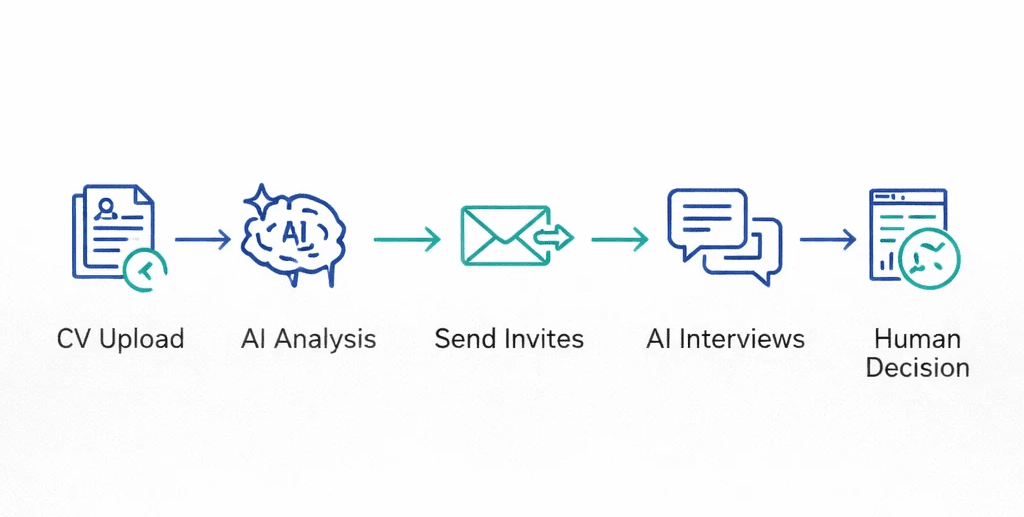
It's an AI-powered CV analysis platform that evaluates your entire candidate pool simultaneously, generating structured scorecards that make top talent immediately visible. Here's how it works in practice:
Bulk CV analysis processes all submitted resumes through AI evaluation, assessing each candidate against your specific job requirements and competencies. Instead of reading 50 CVs sequentially, you upload them once and receive structured analysis across the entire pool.
Side-by-side scorecards display every candidate with clear, comparable metrics. You can instantly see who has stronger relevant experience, better skill alignment, more coherent career progression, without replaying your mental notes or flipping between browser tabs.
Clear ranking based on job-relevant criteria surfaces top candidates automatically. The system scores each CV against predefined competencies, making it immediately obvious who meets your baseline requirements and who exceeds them.
One-click automated invites eliminate administrative friction. When you identify top candidates, a single button sends professional interview invites directly to their email, no template management, no copy-pasting, no manual tracking.
Automated constructive feedback for candidates not selected. Instead of ghosting or sending generic rejections, Coog AI generates specific, actionable feedback explaining what candidates could improve in their CVs. This creates positive candidate experience even for those who don't advance.
ATS integration means Coog AI fits into your existing workflow. CVs flow in, analysis happens automatically, and invite management syncs with your recruitment tools.
And critically, humans make the final call. Coog AI doesn't auto-reject or auto-advance candidates without your review. It provides you with structured scorecards and clear ranking to inform decisions, but you retain full control over who receives interview invites.
A Smarter Model for First-Round Interviews

The solution isn't to interview less or settle faster. It's to redesign the signal-gathering layer entirely.
What if first-round screening wasn't a series of inconsistent conversations but a structured, comparable evaluation that preserved the human insight of interviews while eliminating the noise?
This requires three shifts:
Consistency across candidates. Every applicant answers the same core questions, probing the same competencies, under the same conditions. This doesn't mean robotic questioning; it means intentional structure that enables fair comparison.
Signal extraction over performance theater. The goal isn't to see who interviews best; it's to surface job-relevant thinking, problem-solving approach, and communication clarity. A structured conversation can reveal these qualities better than a resume or a charming anecdote.
Augmented decision-making, not replacement. Humans remain the ultimate decision-makers, but they're equipped with better inputs: structured transcripts, objective scorecards, and comparable insights across the entire candidate pool.
This model does not eliminate recruiter judgment, it clarifies it. Instead of choosing between fragmented impressions, you're choosing based on structured evidence.
How Coog AI Restores Clarity to First-Round Hiring

Coog AI was built specifically to solve this signal clarity problem.
It's an AI-powered conversational interviewer that conducts first-round screening interviews at scale, generating structured, bias-reduced, and directly comparable candidate insights.
Here's how it works in practice:
Conversational AI interviews replace the chaotic variability of human first-rounds with consistent, engaging conversations. The AI asks every candidate the same core questions, adapts follow-ups based on their responses, and maintains a professional, neutral tone throughout. Candidates experience a real conversation, not a chatbot survey, while recruiters gain standardized signal.
Structured transcripts capture the full conversation, preserving nuance and context. Instead of scattered notes or fading memories, you have a complete record of how each candidate reasoned through scenarios, explained their experience, and articulated their motivations. Structured transcripts capture the full conversation, preserving nuance and context. Instead of scattered notes or fading memories, you have a complete record of how each candidate reasoned through scenarios, explained their experience, and articulated their motivations.
Bias-reduced scorecards evaluate responses against predefined competencies, reducing the influence of accent, appearance, interview charisma, or other factors unrelated to job performance. The system scores based on content, not presentation.
Comparable candidate insights display all applicants side-by-side using the same evaluation framework. You can instantly see who demonstrated stronger problem-solving, clearer communication, or more relevant experience, without replaying interviews in your head or rereading fragmented notes.
ATS integration means Coog AI fits into your existing workflow. Candidates are invited, interviewed, and scored without requiring recruiters to learn new platforms or abandon familiar tools.
Again, humans make the final call. Coog AI doesn't auto-reject or auto-advance candidates. It provides recruiters with structured evidence to inform decisions, not algorithmic mandates. You retain full control, but with radically better inputs.
Real-World Application: Startup Scaling From 25 to 60
Consider a fast-growing SaaS startup hiring for three mid-level product roles simultaneously. The founder is acting as hiring lead while managing product roadmap, investor updates, and team coordination.
Before Coog AI:
47 applications per role (141 total CVs)
The founder spends 8+ hours manually reviewing CVs
Tries copying standout CVs into ChatGPT for comparison, but the process is inconsistent and time-consuming
Loses track of which candidates had strong technical backgrounds vs. which had better product sense
Struggles to remember impressions from CVs reviewed three days ago
Invites 18 candidates to first-round interviews based on fragmented notes
Realizes mid-interview that some invited candidates were weaker than some rejected ones
No feedback sent to rejected candidates (too time-consuming)
After implementing Coog AI:
All 141 CVs uploaded to Coog AI platform
AI analysis completed within minutes, generating scorecards for every candidate
Founder reviews side-by-side comparison dashboard showing top 12 candidates with clear score differentiation
Immediately visible: Candidate M has superior product strategy experience; Candidate R has impressive credentials but weaker role-relevant achievements
Clicks "Send Invite" for top 8 candidates, automated emails sent instantly
Remaining 133 candidates receive automated feedback: "Your CV shows strong technical skills, but we're looking for more demonstrated product leadership experience. Consider highlighting specific product outcomes you've driven."
First-round interviews conducted only with high-signal candidates
Decision made confidently within 10 days
Hired candidate exceeds expectations in first 90 days
The transformation is not about speed alone, it is about decision confidence supported by structured, comparable CV analysis.

Strategic Takeaways for Recruiters
Whether or not you implement AI-powered CV analysis, these principles restore clarity to candidate screening:
Structure beats sequential review. Evaluating CVs one after another creates recency bias and comparison difficulty. Find ways to view candidates side-by-side with consistent criteria.
If you're using LLMs manually, systematize the process. Create consistent prompts, track results in a spreadsheet, and compare candidates using the same framework. Or use a platform that does this automatically.
Make screening decisions from structured data, not fading impressions. By the time you've reviewed 40 CVs, you've forgotten what made number 7 stand out. Document evaluations systematically, or use tools that do it for you.
Automate admin that doesn't require judgment. Sending interview invites and rejection emails doesn't need your creative input, automate these tasks and focus cognitive energy on actual decision-making.
Provide feedback even to rejected candidates. Ghosting creates negative employer brand. Brief, constructive feedback costs nothing when automated and builds goodwill with talent you might want to engage in the future.
Recognize cognitive overload as a structural issue, not a personal failing. Decision fatigue in CV screening isn't a sign of recruiter inadequacy, it's a predictable outcome of unstructured processes applied to high-volume evaluation.
Multi-stage clarity beats single-point evaluation. Great hiring decisions aren't made from CVs alone or interviews alone, they require structured signal at both the resume and conversation stage. Build systems that provide comparable insights at each decision point
The Future of Fair, Confident Hiring
The hiring landscape is shifting. Companies that win top talent won't be those with the flashiest employer brands or the highest salaries, they'll be the ones who make better decisions faster, creating experiences that respect both candidate time and recruiter sanity.
Structured, AI-augmented screening isn't about replacing human judgment. It's about clearing the noise so judgment can function properly. It's about giving recruiters back their confidence, their time, and their ability to make hiring decisions they can defend and feel good about.
When you have great candidates, the challenge shouldn't be figuring out who they are. The challenge should be choosing among clearly differentiated options based on job-relevant evidence.
That's not a fantasy. That's what modern hiring infrastructure makes possible.
Ready to experience clarity in your first-round hiring? See how Coog AI transforms candidate screening into a structured, bias-reduced, confidence-building process. Request a demo and discover what decision-making feels like when the signal finally cuts through the noise.
February 2026
Coog AI Editorial Team
8 min read
Start free trial